A City Built
Inside a Biodiversity
Hotspot
Cape Town's mountains, fynbos, penguins, baboons, caracals, wetlands and kelp forests — a field guide to the conservation work protecting one of the richest urban ecosystems on Earth
Cape Town is not just a city next to nature. It is a city built inside one of the most biologically important landscapes on Earth. The mountains, wetlands, lowland fynbos fragments, rocky shores, kelp forests, beaches, estuaries and urban edges of the metro all sit inside the Cape Floristic Region, a global biodiversity hotspot.
This makes conservation in Cape Town unusual. It is not only about fencing off wilderness somewhere far away. It is about keeping critically endangered habitats alive between roads, housing estates, railway lines, schools, vineyards, beaches, harbours and tourist sites. The work is practical, political and often messy: clearing alien trees, managing fire, protecting penguins from cars and dogs, keeping baboons out of kitchens, rescuing oiled seabirds, helping toads cross roads, reducing rat poison, restoring wetlands and deciding where development must stop.
Source note: This article uses City of Cape Town planning documents, SANParks reports, local NGO materials, and peer-reviewed papers including Rebelo et al. (2011), Holmes et al. (2012), Forsyth & van Wilgen (2008), van Wilgen et al. (2012), Hoffman & O’Riain (2012), Engelbrecht et al. (2017), Serieys et al. (2019), Kyriazis et al. (2024), McInnes et al. (2024), and Sherley et al. (2024). Links are listed in the reference section.
Why Cape Town Is a Conservation Hotspot
The easiest mistake is to think of Cape Town conservation as “Table Mountain plus penguins.” Those are the famous symbols, but the deeper story is the city’s lowland ecosystems. Much of Cape Town’s most threatened biodiversity is not on the mountain. It is on the Cape Flats, the West Coast lowlands, the wetlands, the sand fynbos remnants and the old seasonal vleis now surrounded by urban growth.
Rebelo and colleagues described metropolitan Cape Town as a city inside a biodiversity hotspot, estimating roughly 3,250 plant species within the city, including hundreds of threatened species and several already extinct locally. Their paper is still one of the best scientific starting points for understanding why ordinary-looking open ground in Cape Town can be globally important habitat.
The City’s current planning backbone is the Cape Town BioNet, a fine-scale biodiversity network that identifies Critical Biodiversity Areas, Ecological Support Areas and other priority sites needed to keep native biodiversity and ecological processes functioning across the municipality. The 2025 Cape Town Biodiversity Spatial Plan formalises that map as a planning tool so biodiversity priorities are visible before development decisions are made.
| Conservation layer | What it protects | Why it matters |
|---|---|---|
| Table Mountain National Park | Mountain fynbos, Afrotemperate forest pockets, coastline, Cape Point and marine protected areas. | Large continuous habitat, world heritage value, recreation, tourism and fire-adapted fynbos management. |
| City nature reserves | Lowland fynbos, renosterveld, wetlands, estuaries, coastal dunes and urban biodiversity fragments. | Protects habitats that are often more threatened than the mountain itself. |
| BioNet / Biodiversity Spatial Plan | The minimum spatial network needed to conserve biodiversity and ecological function. | Turns biodiversity into a land-use planning layer instead of an afterthought. |
| NGO and citizen-science projects | Penguins, caracals, toads, seabirds, turtles, sharks, baboons, plants and local reserves. | Adds monitoring, rescue, public reporting, education and practical field labour. |
1. The City’s Reserve Network and BioNet
Cape Town’s municipal conservation work is centred on the City’s nature reserves, conservation areas and the BioNet planning system. This is where the city tries to hold onto pieces of habitats that have been heavily reduced by agriculture, housing, roads and industry.
Key sites include Blaauwberg Nature Reserve, Table Bay Nature Reserve, False Bay Nature Reserve, Rondevlei, Rietvlei, Tygerberg Nature Reserve, Edith Stephens Wetland Park, Rondebosch Common, Kenilworth Racecourse Conservation Area, Milnerton Racecourse, Witzands Aquifer Conservation Area, Bracken Nature Reserve, Wolfgat and smaller fragments that often carry rare plant populations.
Holmes et al. (2012) asked a blunt question: can Cape Town’s unique biodiversity be saved while development pressure continues? Their answer was conditional. It can only happen if biodiversity planning is embedded early in land-use decisions, if irreplaceable fragments are secured, and if restoration and management continue after land has been set aside.
The point: Cape Town’s conservation problem is not simply “protect more land.” It is “protect the right fragments, keep them connected where possible, and keep managing them forever.” In fynbos and wetland systems, a reserve that is not burned, cleared, restored and monitored can lose its biodiversity even if it remains legally protected.
2. Fynbos, Fire and Invasive Alien Plant Clearing
Fynbos needs fire, but Cape Town makes fire dangerous. The city’s conservation managers have to balance ecological fire cycles with houses, roads, hikers, heritage sites, power lines and dense invasive alien trees. In the Cape Peninsula, fire is both a regeneration process and a public-safety risk.
Forsyth & van Wilgen (2008) analysed the recent fire history of Table Mountain National Park and showed why fire management in an urban national park is so complex. Van Wilgen and colleagues (2012) later described Table Mountain National Park as a case where ecological evidence, public perception and trade-offs collide: fynbos conservation needs alien clearing and appropriate fire, while residents often experience fire and tree removal as threats to recreation, views and safety.
The biggest practical intervention is still alien plant clearing. Pines, wattles, hakeas, gums and other alien trees can outcompete fynbos, alter water flows, increase fuel loads and make fires burn hotter. SANParks describes alien-fuelled fires as more intense than fynbos fires, sometimes damaging soil and reducing fynbos recovery.
| Threat | Conservation response | Why it is difficult |
|---|---|---|
| Alien trees | Mechanical clearing, follow-up clearing, Working for Water teams, restoration after removal. | Seedbanks persist, follow-up funding is essential, and some public users like shaded alien forests. |
| Fire suppression | Ecologically informed burns, firebreaks, post-fire monitoring. | Too little fire can age fynbos; too frequent or too intense fire can damage species recovery. |
| Urban edge ignition | Fire-risk planning, access control, public education, rapid response. | Arson, accidental ignitions and climate-driven heat/wind events raise risk. |
3. African Penguins, Seabirds and Coastal Rescue
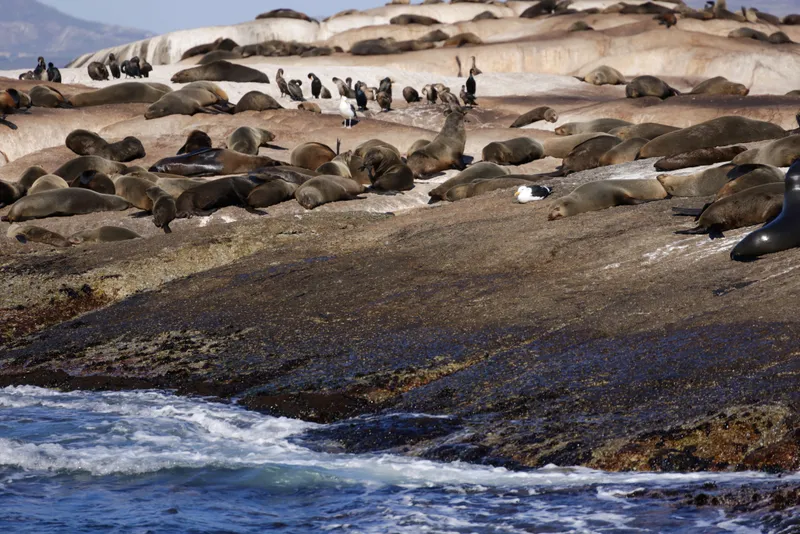
Cape Town’s most famous wildlife conservation story is probably the African penguin. The Boulders / Simon’s Town colony is globally known, but it is also part of a species-wide crisis. African penguins have suffered major declines linked to prey scarcity, commercial fishing pressure, climate-driven shifts in sardine and anchovy, disease, oiling, predation, disturbance and nesting habitat loss.
The Simon’s Town Penguin Management Area is a partnership space involving the City of Cape Town, SANParks, CapeNature, seabird specialists and volunteers. The 2023 Simon’s Town annual report describes daily monitoring, penguin ranger work, injured birds moved to SANCCOB, nest monitoring, road patrols and public-facing management at an urban colony.
SANCCOB, based in Table View, is one of Cape Town’s most important wildlife rescue institutions. Its work includes rescuing, rehabilitating and releasing ill, injured, abandoned and oiled seabirds, especially African penguins. The conservation value is not only in saving individual birds; it is also in keeping threatened breeding populations from losing recoverable adults, chicks and eggs.
Recent penguin science has become increasingly policy-relevant. McInnes et al. (2024) evaluated fishery no-take zones around African penguin colonies, while Sherley et al. (2024) argued that the African penguin’s population decline supports uplisting the species to Critically Endangered. In 2025, a court settlement created new fishing closures around key colonies including Robben Island, an important local win for penguin conservation.
4. Cape Peninsula Baboons: Coexistence Under Pressure
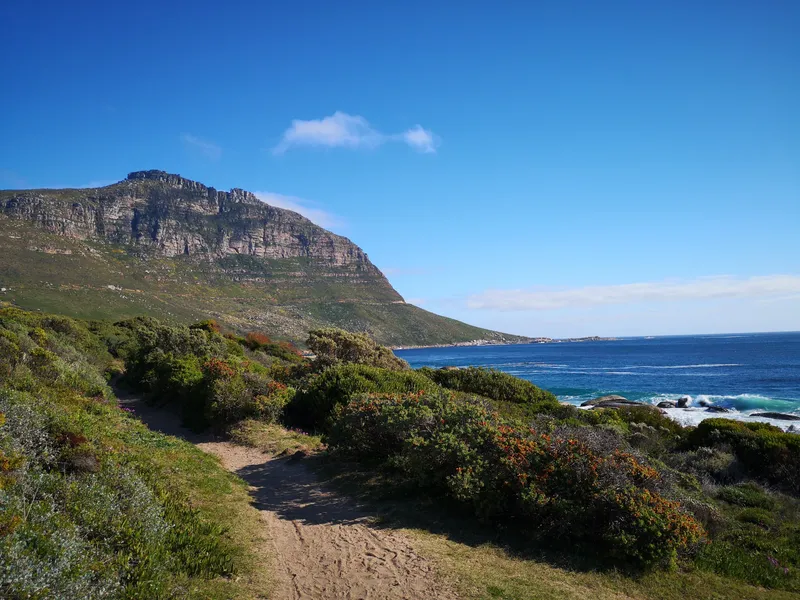
Chacma baboons on the Cape Peninsula are a classic urban edge problem. They are native, intelligent, social and ecologically valuable — but they can also raid bins, enter houses, damage property, injure pets or people, and become dependent on human food. The conflict is not simply “people versus baboons.” It is also people versus people: residents, conservationists, animal-welfare groups, city managers, SANParks, landowners and tourism operators often disagree about what humane management should look like.
Hoffman & O’Riain (2012) used spatial ecology to understand the extent and severity of human-baboon conflict in the Cape Peninsula. Their work helped show that conflict is spatially predictable: baboon raiding is shaped by access to high-calorie human food, urban edges, troop movement routes and the effectiveness of barriers and monitors.
Current management includes ranger teams, waste control, education, deterrence, spatial planning, fencing debates, and ongoing attempts to reduce attractants. The hard lesson is that baboon conservation is as much a governance problem as a biology problem. A troop can only be kept wild if households, businesses and public spaces stop subsidising raiding behaviour.
Practical conservation lesson: Feeding baboons, leaving bins unsecured, or normalising baboons inside houses is not kindness. It increases habituation and often leads to injury, conflict and lethal outcomes for baboons.
5. Urban Caracals and the Hidden Cost of Rat Poison
Cape Town’s caracals are a rare case of a medium-sized wild cat persisting inside a major city. They move through Table Mountain National Park, the urban edge, vineyards, greenbelts and coastal fragments. The Urban Caracal Project has turned them into one of the best-studied urban carnivore populations in Africa.
The research story is sobering. Serieys et al. (2019) found widespread anticoagulant rodenticide exposure in predators in Cape Town, with caracals among the most exposed species. Later genomic work by Kyriazis et al. (2024) examined the consequences of isolation and gene flow for the Cape Peninsula caracal population, highlighting how urban development can turn a charismatic predator into a small, genetically vulnerable population.
Conservation action here is not a single reserve. It is a city-wide behaviour change: reduce second-generation anticoagulant rat poisons, report roadkill and snares, protect movement corridors, manage vineyards and urban edges responsibly, and keep public enthusiasm connected to evidence rather than myth.
- Western Leopard Toads: Road Crossings, Wetlands and Citizen Rescue
The western leopard toad is an endangered amphibian strongly associated with Cape Town’s urban wetlands and seasonal breeding movements. The conservation challenge is brutally simple: adults need to cross roads to reach breeding sites, and many are killed by vehicles.
Conservation efforts include volunteer road patrols during breeding season, public reporting, reflective road signs, wetland rehabilitation, habitat protection, school education and local monitoring. The City’s own fact sheet lists urbanisation, habitat loss, roads, pollution, litter and water quality as major threats.
This is one of Cape Town’s best examples of small-scale citizen conservation mattering. A single wet night can be a major breeding movement. A few trained volunteers with torches, buckets, signage and good data can directly reduce mortality while also building public awareness of the wetland system beneath the suburb.
7. Wetlands, Estuaries and the Ramsar Wetland City Story
Cape Town is also a wetland city. Table Bay Nature Reserve, Zandvlei, Rondevlei, Zeekoevlei, Rietvlei, Edith Stephens Wetland Park, Lower Silvermine and the broader False Bay wetland system support birds, amphibians, fish, hippos, invertebrates, plants and flood-buffering functions.
The City’s Biodiversity Management Progress Report notes that Cape Town was accredited as a Ramsar Wetland City in 2022, one of only a few in Africa. That recognition matters because urban wetlands are often treated as wastelands until they flood, burn, smell, clog with litter, or lose the species that made them valuable.
Wetland conservation in Cape Town includes alien plant clearing, water-quality monitoring, litter removal, reedbed management, sewage-spill response, bird counts, amphibian protection, hydrological restoration and education. The work is less glamorous than penguins, but it is central to climate adaptation and urban biodiversity.
8. False Bay, Kelp Forests and Marine Protected Areas
Cape Town’s marine conservation work sits inside one of the richest cold-temperate marine systems in the world. The Table Mountain National Park Marine Protected Area wraps around much of the Cape Peninsula and includes controlled zones and no-take areas. The MPA protects rocky reefs, kelp forests, sandy habitats, seabird foraging areas and species such as African penguins, abalone, linefish, sharks and rays.
SANParks’ 2022 state-of-knowledge report for the Table Mountain National Park MPA summarises the evidence base for managing this system. False Bay is not just a beach and surf area; it is a living seascape shaped by fishing pressure, shark movements, kelp forest dynamics, whale migration, tourism, pollution and climate-linked marine heat events.
Shark Spotters is one of Cape Town’s most internationally interesting conservation programmes because it solves a conflict without killing the animal. Engelbrecht et al. (2017) showed that the Shark Spotters programme can reduce spatial overlap between recreational water users and white sharks in False Bay. It is a practical example of coexistence technology: trained observers, flags, sirens, public communication and beach behaviour change.
9. Sea Turtle Rescue and Ocean Plastic Evidence
Cape Town is not a major turtle nesting city, but it is a major rescue node. Young loggerhead turtles and other species can wash up cold-stunned, injured or weak along the Western Cape coast after storms and currents carry them into colder waters. The
Two Oceans Aquarium Foundation Turtle Conservation Centre
rescues, rehabilitates and releases hatchling and adult turtles, and its Turtle Rescue Network turns public reports into real conservation action.
The programme also produces important evidence about ocean plastic. Many rescued turtles have ingested plastic or are entangled in marine debris. In this way, the turtle hospital is both a rescue facility and a window into what is happening offshore.
10. Restoration, Friends Groups and Citizen Science
Cape Town conservation depends heavily on local people. Friends groups, botanical societies, bird clubs, toad volunteers, iNaturalist users, school groups, neighbourhood clean-up teams and reserve volunteers often provide the eyes, labour and political support that formal agencies cannot supply alone.
The most valuable citizen work is usually unglamorous: removing invasive seedlings before they become trees, recording plant species after fire, reporting caracal roadkill, monitoring frog calls, counting birds, rescuing penguin chicks, collecting litter before it reaches wetlands, and pushing back when irreplaceable fragments are treated as vacant land.
In a city as biologically fragmented as Cape Town, small patches matter. So do small acts repeated for years.
Who Is Doing the Work?
| Organisation / programme | Main focus | Useful link |
|---|---|---|
| City of Cape Town Biodiversity Management | Municipal reserves, BioNet, wetlands, invasive species, urban biodiversity, reserve management. | City nature reserves |
| SANParks / Table Mountain National Park | Mountain fynbos, fire, alien clearing, Cape Point, Boulders, marine protected area. | Table Mountain National Park |
| SANCCOB | Seabird rescue, African penguins, oiled bird response, chick/egg rescue and rehabilitation. | SANCCOB |
| Shark Spotters | Non-lethal shark safety and white shark coexistence at Cape Town beaches. | Shark Spotters |
| Urban Caracal Project | Urban carnivore ecology, caracal genetics, roadkill, snares, rodenticide exposure and public reporting. | Urban Caracal Project |
| Western Leopard Toad conservation groups | Road patrols, breeding-season rescue, wetland protection and public education. | Western Leopard Toad |
| Two Oceans Aquarium Foundation | Turtle rescue, turtle rehabilitation, plastic pollution evidence, ocean education. | Turtle Conservation Centre |
| BirdLife South Africa / Cape Bird Club | Penguins, seabird monitoring, bird counts, Important Bird and Biodiversity Areas, advocacy. | BirdLife South Africa |
How to Help Without Making Things Worse
Do not feed wildlife. This is especially important for baboons, penguins, seals, gulls and urban mammals.
Stop using high-risk rat poisons. Rodenticides move through the food chain and can kill caracals, owls, mongooses and otters.
Secure bins and compost. Waste is one of the biggest drivers of baboon conflict.
Drive carefully near wetlands during rainy breeding nights.
Western leopard toads and other amphibians are vulnerable on roads.
Volunteer through credible groups. Reserve friends groups, SANCCOB, toad patrols and beach clean-ups are practical entry points.
Use citizen science apps responsibly. Upload biodiversity observations, but obscure locations for sensitive species when needed.
Respect closures after fire. Burnt fynbos needs time to regenerate, and trampling can damage seedlings.
Support planning that protects irreplaceable fragments.
The least scenic patch may hold the rarest plants.
Selected Papers and Reports
Rebelo, A. G., Holmes, P. M., Dorse, C. & Wood, J. (2011).
Impacts of urbanization in a biodiversity hotspot: conservation challenges in Metropolitan Cape Town
. South African Journal of Botany.
Holmes, P. M., Rebelo, A. G., Dorse, C. & Wood, J. (2012).
Can Cape Town’s unique biodiversity be saved? Balancing conservation imperatives and development needs
. Ecology and Society.
Forsyth, G. G. & van Wilgen, B. W. (2008).
The recent fire history of the Table Mountain National Park and implications for fire management
. Koedoe.
van Wilgen, B. W. et al. (2012).
Evidence, perceptions, and trade-offs associated with invasive alien plant control in Table Mountain National Park
. Ecology and Society.
Hoffman, T. S. & O’Riain, M. J. (2012).
Monkey Management: Using Spatial Ecology to Understand the Extent and Severity of Human-Baboon Conflict in the Cape Peninsula, South Africa
. Ecology and Society.
Engelbrecht, T. et al. (2017).
Shark Spotters: Successfully reducing spatial overlap between white sharks and recreational water users in False Bay, South Africa
. PLOS ONE.
Serieys, L. E. K. et al. (2019).
Widespread anticoagulant poison exposure in predators in a rapidly growing South African city
. Science of the Total Environment.
Kyriazis, C. C. et al. (2024).
The influence of gene flow on population viability in an isolated urban caracal population
. Proceedings of the Royal Society B.
McInnes, A. M. et al. (2024).
Commercial fishery no-take zones for African penguins are not fit for purpose
. ICES Journal of Marine Science.
Sherley, R. B. et al. (2024).
The African Penguin Spheniscus demersus should be classified as Critically Endangered
. Ostrich.
Further Local Sources
City of Cape Town Biodiversity Spatial Plan 2025
Council adoption of Cape Town Biodiversity Spatial Plan
City Biodiversity Management Progress Report 2023/24
SANParks: Table Mountain National Park
Table Mountain National Park MPA State of Knowledge Report
- SANCCOB
Two Oceans Aquarium Foundation Turtle Conservation Centre
- Urban Caracal Project
Western Leopard Toad conservation network