Hoedspruit & Cape Town, South Africa · June 13, 2026
200 Leopards.
One Full-Time Person.
A Model Worth Watching.
Ingwe Research Program operates across 31 reserves in the Greater Kruger on a single salary
Marine Servonnat is the Managing Executive of the Ingwe Research Program. She wrote the Annual Impact Report, designed it, and published it. She manages five active research projects, 247 meetings, and everything else that comes with building a conservation organisation. There is no deputy. There is no admin assistant. Ingwe runs on one full-time salary and a network of reserves, guides, volunteers, and citizen scientists who believe the leopards are worth it.
Despite this — or because of the clarity it forces — Ingwe has individually identified over 200 leopards across 31 reserves in the Greater Kruger. It has processed 11,000+ unique sighting encounters submitted by 400 citizen scientists. It runs five research projects, launched a K9 scent detection pilot, and published a Framework for Research Ethics approved by its Board. In June 2026, it launched a mobile app built by two volunteers in 14 months.
This is not a story about an app. It is a story about a conservation model that works because it was designed around what field researchers actually need, not what an organisation chart says they should have.
What Ingwe Actually Is
Ingwe Research Program is a nonprofit company registered in South Africa (NPC K2024401955, PBO 930087476), but the research itself has been running for much longer — the organisation traces its lineage back over two decades of leopard monitoring in the Lowveld. It was formally incorporated in 2024 with headquarters in Hoedspruit and a second office in Cape Town.
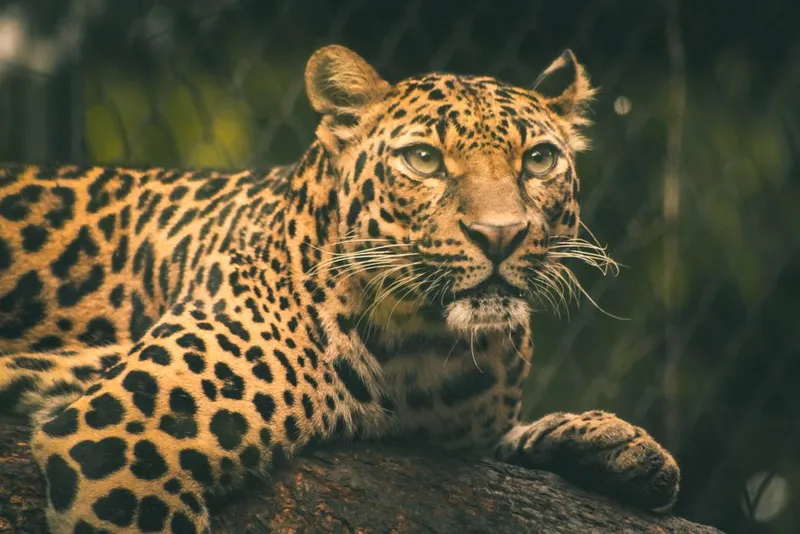
The name is deliberate. Ingwe is the Zulu word for leopard. Zulu does not have a separate word for “leopardess.” Female leopards are called ingwe, same as males — a linguistic nod to the species equality that the research itself reflects: Ingwe studies the population, not just the big males that tourists want to photograph.
The mission, in their words: to effectively conserve leopards in South Africa by empowering stakeholders through practical scientific recommendations, enabled by formal research, citizen science, novel technologies, and proactive collaboration.
What “practical scientific recommendations” means on the ground: a reserve manager gets a home range map showing which leopard uses which portion of their property. A provincial roads agency gets a culvert usage report with photographs of seven individual leopards using specific underpasses, along with mortality data from the 47km stretch of road those culverts sit beneath. A lodge guide gets an identification kit that tells a guest the leopard they just photographed is named Bokamoso, she had a cub last season, and she was last sighted three kilometres east of here in April.
The Five Research Projects
Ingwe runs five active research projects simultaneously. On one salary. Here is what each one does.
1. Citizen Science Leopard Monitoring
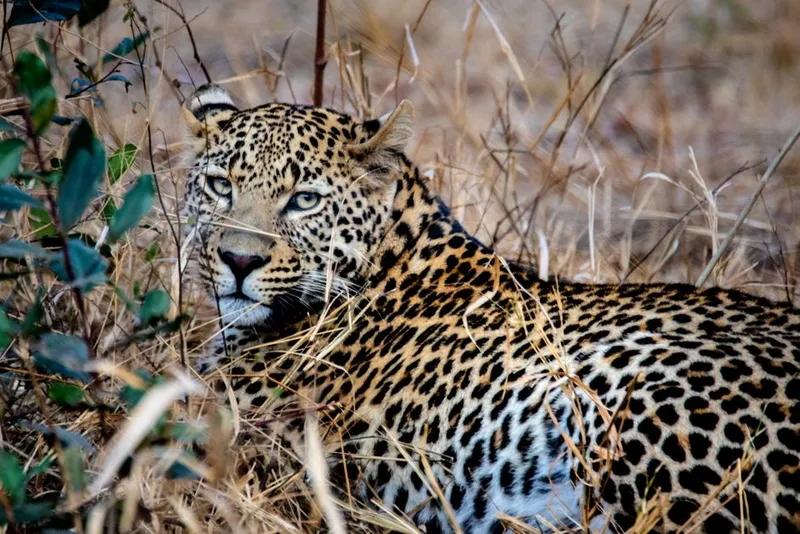
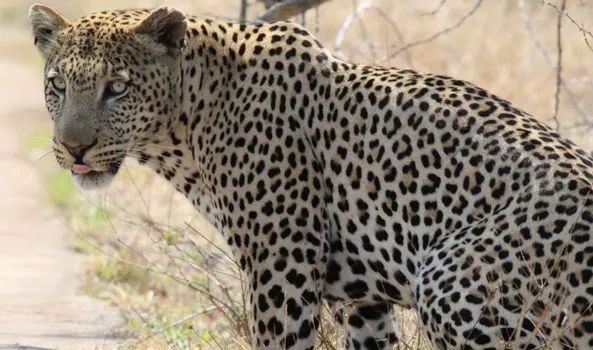
The backbone. Guides, rangers, lodge managers, and guests across 31 reserves submit leopard sightings — photos, video, GPS location — that feed into a central population database. Each leopard’s unique spot pattern is matched using AI-assisted identification. The dataset contains 11,000+ unique encounters and has identified over 200 individual leopards. The network includes 45+ partner entities and over 400 citizen scientists. This is the largest carnivore-focused citizen science project in South Africa.
2. Road Ecology on the R40
The R40 is a 47km stretch of provincial road running through the heart of leopard country between the Kruger National Park and the Blyde River Canyon. In 84 survey days, Ingwe documented 198 wildlife mortalities across 38 species — including seven individually named leopards. Extrapolated across a full year, the estimate approaches 860 animals lost on this single road. Africa Geographic is producing a documentary about this project, Spots on the Line.
3. Wildlife Use of Culverts
Camera traps positioned inside road culverts reveal which underpasses wildlife actually uses. The project’s emblematic image: Bokamoso, a resident female, emerging from a culvert with her cub. She had taught her cub to use it. This data will inform infrastructure decisions — which culverts need maintenance, which need modification, and where new crossing structures should be built.
4. K9 Scent Detection Pilot
A first-of-its-kind project exploring whether trained detection dogs can locate leopard scat for genetic sampling. Partnered with Canines for African Nature. If successful, this provides a non-invasive method for population genetics that does not require collaring or darting.
5. Human-Leopard Coexistence
Led by researcher Eleanor Salisbury in partnership with Transfrontier Africa, this project investigates perceptions and behaviours of communities living alongside leopards, with the goal of developing evidence-based coexistence methods.
What the Numbers Say
| Metric | Value |
|---|---|
| Individually identified leopards | 200+ |
| Unique sighting encounters | 11,000+ |
| Partner reserves | 31 |
| Partner entities enrolled | 45+ |
| Citizen scientists | 400+ |
| Wildlife mortalities documented (R40, 84 days) | 198 |
| Leopards killed on R40 (documented) | 7 |
| Active research projects | 5 |
| Full-time staff | 1 |
| Newsletter subscribers | 600 |
| Months of reserves remaining | 7 |
The last two rows are connected. Seven months of reserves on one salary is not a financial crisis — it is better than most small conservation NGOs manage. But it is not sustainable. The organisation’s FY26 Annual Impact Report makes this explicit: the infrastructure is proven, the data is rigorous, the citizen science network is working. What is missing is the funding to hire staff so the person running five projects can focus on research instead of admin.
The People Who Make It Work
Marine Servonnat is the Managing Executive and the organisation’s sole full-time employee. She manages the research, the partnerships, the communications, the fundraising, the volunteers, and the board. She wrote and designed the Annual Impact Report. She gets up at sunrise and drives the R40.
The Board: Simon Hartley, Tom Lautenbach, and trustees Sophie Gandet, Paul ffolkes Davis, and Mark Dumbleton provide governance, strategic direction, and donor stewardship. They are not figureheads — Simon Hartley publicly describes Marine’s work as carrying the programme forward “every single day with such a potent blend of passion and clearheadedness.”
The volunteers: Liam Hoffmann, a software engineer who read the newsletter and emailed offering to build an app. Fourteen months later, the Ingwe app launched on Google Play. Jemma Jeffery, a UX designer pivoting into conservation technology, designed the entire interface from scratch. Eleanor Salisbury leads the human dimensions research. Rachael Leeman contributed to the road ecology work. Dozens of guides, rangers, and lodge staff submit sightings daily. Hundreds of guests photograph leopards and submit those images to a database that turns tourism into science.
Why This Model Matters
Most conservation organisations follow a predictable trajectory: a passionate founder starts small, secures a grant, hires staff, builds infrastructure, and gradually becomes an institution. The model works when the funding holds. When it does not — when the grant ends and the staff scatter — the data, the relationships, and the institutional knowledge often scatter with them.
Ingwe has inverted this. The research network — 31 reserves, 400 citizen scientists, 11,000 encounters — exists independently of the organisation’s staffing level. The guides will keep submitting sightings whether Marine has an assistant or not. The leopards will keep walking through culverts whether the K9 pilot gets funded or not. The institutional value is in the dataset and the network, not in the org chart.
This is a genuinely different structure. Ingwe is thin at the centre and thick at the edges. The centre is one full-time researcher with a board. The edges are 400 people holding phones across an area the size of a small country. The technology — the app, the AI identification, the database — is what connects the edges to the centre. It is the infrastructure, not the product.
The Field Company exists to build tools for organisations like this. The thesis: the labour, the expertise, and the commitment are already out there. What has been missing is the infrastructure that lets the effort at the edges flow into structured, analysable, actionable data at the centre without requiring the centre to hire a developer.
Ingwe proved the thesis is correct. One full-time person. 200 leopards. Five research projects. Two volunteers built the app in 14 months because the organisation had a clear problem, a working network, and enough clarity that a software engineer could look at the situation and understand exactly what needed to be built.
The model is replicable. Not the specifics — leopards in the Greater Kruger — but the structure: a thin professional core, a thick network of contributors, technology that connects them, and the discipline to run on a shoestring until the data proves the case for more funding. That structure works for any species, any region, any research question where the observers are already out there and the infrastructure is the missing piece.
How to Support Ingwe
Ingwe is in an active fundraising phase. They have seven months of reserves and a proven track record. Here is what moves the needle:
Read the Annual Impact Report FY26. It is available on their website at ingweresearchprogram.org. It is the clearest window into what this organisation actually does, and it makes the case for professional conservation infrastructure better than any summary can.
Subscribe to the newsletter. 600 people already do. It goes out monthly via Substack and it is consistently the best-written conservation newsletter we have read — direct, honest, specific.
Donate. The GoFundMe is at gofundme.com/f/ingwe-research-program. Donations go directly into field operations — equipment, vehicle costs, data processing, the unglamorous infrastructure that produces the science.
Share. If your network includes conservation donors, grant-makers, or CSR decision-makers who fund wildlife research in Southern Africa, forward them the Impact Report. Ingwe needs sponsors more than it needs signal boosts, but signal boosts find sponsors.
If you work in the Greater Kruger. If your reserve, lodge, or organisation operates in the area and you want to understand how the citizen science network works, contact [email protected]. The network grows by adding reserves, not by centralising everything into one office.
If you are a developer. Read our post on how to contribute to open source conservation technology. Liam Hoffmann did it in 14 months. You can too.