Planetary Boundaries Explained
For roughly 10,000 years, Earth stayed inside an unusually stable Holocene envelope. Climate, water, forests, oceans, nutrient cycles, and the biosphere varied — sometimes dramatically at regional scale — but the planetary state remained stable enough for agriculture, cities, and every civilisation you have ever heard of to emerge.
That stability is now gone. Human activity has pushed Earth beyond the conditions that sustained our species’ entire recorded history.
In 2009, a team of 28 Earth system scientists led by Johan Rockström proposed a way to measure exactly how far we have pushed. They identified nine critical processes that regulate the planet’s stability and asked a simple question: where are the guardrails?
They called it the planetary boundaries framework. In their first assessment, three boundaries were already breached. By 2015, four. By 2023, six. As of the 2025 Planetary Health Check, seven of nine boundaries are transgressed.
Here is every boundary, what it measures, the specific numbers, and where we stand today.
Data note: the status table uses the latest planetary-boundary assessment values available from the 2025 Planetary Health Check and the 2023 Science Advances update. Continuous observations, such as atmospheric CO₂, change month by month. Where those live data are useful, they are called out separately rather than mixed into the boundary assessment tables.
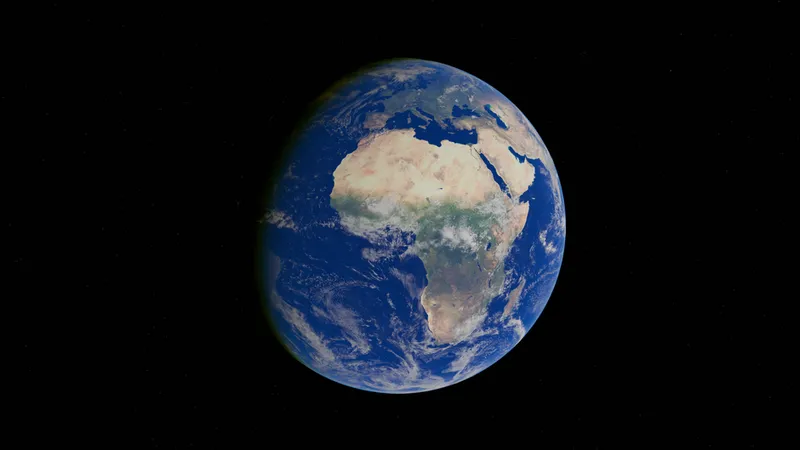
The Framework at a Glance
The nine boundaries cover the biophysical systems that kept Earth in a Holocene-like state for the past 10 millennia. Each has a quantitative control variable, a boundary value, and an assessed value. The boundaries are set at the lower end of a zone of increasing risk — a precautionary approach. Cross the boundary and you enter a yellow-to-red zone where the probability of non-linear, irreversible change rises. Go deep enough and you hit the purple zone: high risk with high confidence.
The big update since the 2023 framework paper is ocean acidification. In 2023, six of nine boundaries were assessed as transgressed and ocean acidification was still described as close to the boundary. The 2025 Planetary Health Check assesses it as breached for the first time, lifting the count to seven of nine. The two boundaries still inside the global safe zone are stratospheric ozone depletion and atmospheric aerosol loading, although aerosols remain regionally dangerous over parts of South and East Asia.
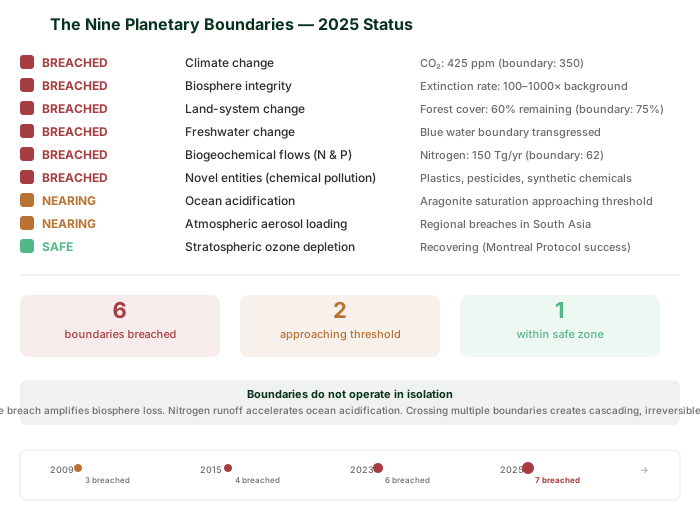
The planetary boundaries framework. Green = safe. Yellow to red = zone of increasing risk. Purple = high risk. Seven wedges now extend beyond the safe zone. Credit: Azote for Stockholm Resilience Centre, based on Sakschewski and Caesar et al. 2025. Licensed under CC BY-NC-ND 3.0.
1. Climate Change BREACHED
What it measures: Human disruption of Earth’s energy balance through greenhouse gas emissions. Two control variables: atmospheric CO₂ concentration and total radiative forcing.
| Variable | Boundary | Assessed value | Preindustrial |
|---|---|---|---|
| Atmospheric CO₂ | 350 ppm | 423 ppm | 280 ppm |
| Radiative forcing | +1 W/m² | +2.97 W/m² | 0 |
The 350 ppm boundary corresponds to roughly 1°C of warming — slightly below the Paris Agreement’s 1.5°C target. The planet is now in the high-risk zone on both measures. Climate change is designated a core boundary: its transgression amplifies risk across every other boundary in the framework.
One caveat matters: the table above is the boundary-assessment view, not a live CO₂ dashboard. NOAA’s Mauna Loa record reached 432.34 ppm in May 2026, compared with 430.51 ppm in May 2025. Mauna Loa is a seasonal, site-specific monthly reading; the planetary-boundary assessment uses broader global mean metrics. The conclusion is the same either way: we are far beyond 350 ppm.
2. Biosphere Integrity BREACHED
What it measures: The health of Earth’s living systems. Two dimensions: genetic diversity (measured as extinction rate) and functional integrity (measured as human appropriation of net primary production, or HANPP).
| Dimension | Variable | Boundary | Assessed value |
|---|---|---|---|
| Genetic diversity | Extinction rate (E/MSY) | <10 | >100 |
| Functional integrity | HANPP (% of Holocene NPP) | <10% | 30% |
HANPP measures the share of the planet’s photosynthetic energy that humanity consumes or displaces. Through agriculture, forestry, grazing, and urbanisation, we now appropriate roughly 30% of the biosphere’s energy flow — triple the boundary. This boundary was crossed in the late 19th century, a generation before anyone noticed. Of an estimated 8 million animal and plant species, roughly 1 million are threatened with extinction. The 2024 Living Planet Index reports a 73% average decline in monitored vertebrate wildlife populations between 1970 and 2020; that is a population-index measure, not a count of individual animals lost.
3. Land System Change BREACHED
What it measures: Conversion of natural ecosystems — primarily forests — to agricultural and urban land.
| Variable | Boundary | Assessed value |
|---|---|---|
| Global forest area intact | 75% (85% tropical, 85% boreal, 50% temperate) | 59% |
Forests are the land biome with the strongest coupling to the climate system. They regulate carbon, water, and energy fluxes at the planetary scale. Land conversion also connects directly to the freshwater and biosphere boundaries: clear forests, and you alter rainfall recycling, soil moisture, habitat, and carbon storage at once.
4. Freshwater Change BREACHED
What it measures: Human modification of the entire terrestrial water cycle — surface and groundwater (blue water) and soil moisture available to plants (green water). The 2023 update fundamentally revised this boundary to capture far more than simple water consumption.
| Component | Variable | Boundary | Assessed value |
|---|---|---|---|
| Blue water | % land area with streamflow deviations | 12.9% | 22.6% |
| Green water | % land area with soil moisture deviations | 12.4% | 22.0% |
Under the old metric — 4,000 km³/year of consumptive water use — freshwater appeared safely within limits. The revised assessment split the system into blue water and green water, revealing that blue-water deviations crossed the boundary around 1905 and green-water deviations around 1929. We simply had not been measuring the right thing.
5. Biogeochemical Flows BREACHED
What it measures: Disruption of natural nitrogen and phosphorus cycles through industrial fertiliser production and agricultural runoff.
| Element | Variable | Boundary | Assessed value |
|---|---|---|---|
| Nitrogen | Industrial N fixation (Tg/yr) | 62 | 165 |
| Phosphorus (regional) | P to erodible soils (Tg/yr) | 6.2 | 18.2 |
The Haber-Bosch process feeds roughly half of humanity. It has also doubled the global nitrogen cycle. Excess nitrogen and phosphorus from fertilisers drain into waterways, driving eutrophication, oxygen loss, and hundreds of coastal dead zones. This is one of the hardest boundaries politically: reducing excess nutrient pollution is essential, but doing it badly would threaten food security. The solution is not simply “less fertiliser everywhere”; it is better nutrient efficiency, lower losses, circular nutrient recovery, and farming systems that can feed people without overwhelming rivers, lakes, and coasts.
6. Ocean Acidification BREACHED
What it measures: Decreasing pH of ocean surface waters as they absorb atmospheric CO₂. The 2025 Planetary Health Check assessed this boundary as transgressed for the first time.
| Variable | Boundary | Assessed value | Preindustrial |
|---|---|---|---|
| Aragonite saturation state (Ω) | 2.86 | 2.84 | 3.44 |
Aragonite is the form of calcium carbonate that corals, molluscs, pteropods, and shell-building plankton use. The boundary is set at roughly 80% of preindustrial saturation. At 2.84 — just below 2.86 — the 2025 assessment places the ocean outside the safe zone. Surface ocean pH has already dropped by about 0.1 units since the industrial era, corresponding to roughly a 30–40% increase in acidity. A separate 2025 study found that the boundary may have entered its uncertainty range by 2020, which is why this should be read as a delayed formal diagnosis rather than a sudden one-year collapse.
Acidification is not acting alone. It combines with marine heatwaves, deoxygenation, nutrient runoff, and overfishing. NOAA reports that the fourth global coral bleaching event, which ran from early 2023 to mid-2025, exposed 84% of the world’s coral reef area to bleaching-level heat stress across the Pacific, Atlantic, and Indian Ocean basins.
7. Atmospheric Aerosol Loading NOT BREACHED (globally)
What it measures: Microscopic particles from both natural and human sources that affect climate, monsoon systems, and human health.
| Variable | Boundary | Assessed value (global) |
|---|---|---|
| Interhemispheric AOD difference | 0.1 | 0.063 |
Globally within limits — but the global number hides regional transgression. South Asia (AOD ~0.3–0.35) and East China (AOD ~0.4) both exceed the regional boundary of 0.25. Aerosol loading can disrupt monsoon rainfall patterns that billions of people depend on for agriculture. It also complicates climate communication: some reflective aerosols have masked a portion of greenhouse warming, so cleaning the air improves health while revealing warming that pollution had been temporarily hiding.
8. Stratospheric Ozone Depletion NOT BREACHED
What it measures: Thinning of the stratospheric ozone layer that shields us from UV radiation.
| Variable | Boundary | Assessed value | Preindustrial |
|---|---|---|---|
| Stratospheric O₃ (Dobson Units) | 277 DU | 285.7 DU | 290 DU |
This is the single success story in the framework, and it proves that planetary-scale environmental problems can be solved. The Montreal Protocol (1987) phased out ozone-depleting substances, and the WMO reports that production and consumption of controlled ozone-depleting substances have been cut by more than 99%. If current policies remain in place, ozone is expected to recover to 1980 values by around 2040 for most of the world, 2045 over the Arctic, and 2066 over Antarctica. It remains depleted over Antarctica during Austral spring, but globally the boundary is respected.
9. Novel Entities BREACHED
What it measures: Synthetic chemicals and human-made materials released into the environment without adequate testing for Earth system impacts.
| Variable | Boundary | Assessed value |
|---|---|---|
| % synthetics released without safety testing | 0% | >0% |
Over 350,000 synthetic chemicals and mixtures are on the global market. Under the EU REACH regulation, approximately 80% of registered chemicals had been in use for more than 10 years without completing a safety assessment. Plastic production exceeds 400 million tonnes per year and is still rising. The “cocktail effects” of chemical mixtures in the environment are poorly understood. This boundary is not a neat threshold like 350 ppm CO₂; it is a warning that the rate, volume, and novelty of chemical release have outrun society’s ability to test, monitor, and govern systemic risk.
Status Summary
| Boundary | Control Variable | Boundary Value | Assessed value | Status |
|---|---|---|---|---|
| Climate Change | CO₂ / Radiative forcing | 350 ppm / +1 W/m² | 423 ppm / +2.97 | High risk |
| Biosphere Integrity | Extinction rate / HANPP | <10 E/MSY / <10% HANPP | >100 E/MSY / 30% HANPP | High risk |
| Land System Change | Forest area intact | 75% | 59% | Increasing risk |
| Freshwater Change | Blue/green water deviation | 12.9% / 12.4% | 22.6% / 22.0% | Increasing risk |
| Biogeochemical Flows | N fixation / P to soil | 62 / 6.2 Tg/yr | 165 / 18.2 Tg/yr | High risk |
| Ocean Acidification | Aragonite saturation | 2.86 Ω | 2.84 Ω | Just breached (2025) |
| Aerosol Loading | Interhemispheric AOD | 0.1 | 0.063 | Safe (globally) |
| Ozone Depletion | Stratospheric O₃ | 277 DU | 285.7 DU | Safe |
| Novel Entities | Untested synthetics released | 0% | >0% | Breached |
What Happens When Boundaries Interact
These nine systems do not operate in isolation. They are coupled — sometimes in ways that amplify risk, sometimes in ways that mask it.
Cascading effects are the rule, not the exception. The framework identifies climate change and biosphere integrity as core boundaries — transgress either one and the safe operating space for every other boundary shrinks. Some examples:
- Climate → Biosphere: Warming drives species extinction, which reduces ecosystem carbon storage, which accelerates warming. A feedback loop that amplifies both.
- Land use → Freshwater: Deforestation reduces evapotranspiration and rainfall recycling. In the Amazon, this can push forest regions toward hotter, drier conditions, increasing fire risk and weakening the forest’s carbon sink.
- N/P flows → Ocean acidification → Biosphere: Nutrient runoff fuels algal blooms. When algae decompose, they consume oxygen, creating dead zones. Add warming and acidification, and marine ecosystems face three simultaneous, mutually reinforcing stressors.
- Aerosols → Climate: Aerosols have masked roughly 0.5°C of warming. As countries reduce coal burning and aerosol pollution (good for health, good for air quality), this masking effect diminishes — unmasking additional warming. The clean air we want comes with a climate debt.
- All boundaries → Tipping points: Each boundary carries its own tipping elements. The Greenland ice sheet, the West Antarctic ice sheet, the Amazon, the Atlantic overturning circulation, permafrost carbon — each has a threshold beyond which change becomes self-sustaining and essentially irreversible on human timescales.
What This Is Not Saying
Crossing a planetary boundary does not mean the world ends the next morning. It means the system has moved outside the Holocene-like safe operating space and into a zone where risks rise, feedbacks become harder to predict, and recovery becomes more expensive. Think of it as crossing a medical risk threshold: the diagnosis is serious before the organ fails.
It also does not mean every place is equally responsible or equally exposed. Some boundaries are global, like climate and ocean acidification. Others are deeply regional, like freshwater, aerosols, land-system change, and nutrient runoff. A globally safe number can still hide local danger, while a globally breached boundary can still be driven disproportionately by a subset of countries, industries, and consumption patterns.
This is why newer work on safe and just Earth system boundaries matters. It asks not only what keeps Earth stable, but what prevents significant harm to people. In that assessment, seven of eight quantified global safe-and-just boundaries were already crossed, and many local hotspots face several transgressions at once.
Is This Framework Useful?
An honest assessment.
What the framework does well
- It treats the Earth as one system. Most environmental policy addresses problems in isolation — climate here, biodiversity there, water somewhere else. The framework forces integration. It makes explicit what scientists have long understood: the planet is a single, coupled system.
- It provides quantitative targets. “Protect the environment” is not an operational goal. “Keep atmospheric CO₂ below 350 ppm” is. The framework gives policymakers, corporations, and civil society something to measure against.
- It’s being used. The EU’s 8th Environment Action Programme is legally bound to the framework. Several nations have produced planetary boundary assessments. The World Business Council for Sustainable Development incorporated it into Vision 2050. This is not an academic curiosity — it is becoming operational infrastructure for environmental governance.
- It communicates clearly. The doughnut diagram — nine coloured wedges radiating from a safe green centre — is one of the most effective visualisations in environmental science. You can look at it and immediately understand: green good, red bad, we’re in the red.
Limitations
- Global aggregation hides regional reality. The aerosol boundary is globally safe but regionally breached over South and East Asia, where over 2 billion people live. A global “safe” reading can be dangerously misleading.
- Some boundaries are poorly quantified. Novel entities (chemical pollution) and aerosol loading remain difficult to pin to a precise planetary threshold. The 0% boundary for untested synthetics is aspirational, not empirical.
- It doesn’t address social foundations. The original framework is purely biophysical. Kate Raworth’s Doughnut Economics (2012) addressed this by adding an inner ring representing minimum social standards — food, water, health, education, political voice. A safe planet that is unjust is not a stable planet.
- Boundary interactions are not well-modelled. The framework acknowledges that boundaries interact, but comprehensive Earth system models that capture all nine simultaneously do not yet exist. Our understanding of cascading effects is largely qualitative.
- Nitrogen is genuinely difficult. Roughly 4 billion people are alive today because of synthetic nitrogen fertiliser. The nitrogen boundary is deeply transgressed — but pulling back is not a simple technical problem. It’s a problem of how humanity feeds itself.
The framework’s authors have been clear from the start: these are “rough, first estimates only, surrounded by large uncertainties and knowledge gaps” (Rockström et al., 2009). That does not make them useless. It makes them honest.
Who Uses This Framework
| Sector | Examples |
|---|---|
| International bodies | UNEP, UN Sustainable Development Goals discussions, Global Environmental Outlook |
| Regional governance | EU 8th Environment Action Programme (legally binding), European Environment Agency assessments |
| National governments | Switzerland, Sweden, Netherlands, Germany, New Zealand — all have published national boundary assessments |
| Corporate / finance | World Business Council for Sustainable Development (Vision 2050), Science Based Targets Network, growing ESG adoption |
| Science | Potsdam Institute annual Planetary Health Check, Earth Commission “safe and just” boundaries (2023) |
The Ozone Lesson
Two boundaries are not breached. One of them — aerosol loading — may be more a function of measurement limitation than genuine safety. The other — stratospheric ozone — is the genuine article: a planetary-scale environmental problem identified, agreed upon, and solved through coordinated international action.
The Montreal Protocol (1987) is the single most successful international environmental treaty ever enacted. It phased out CFCs. It worked. The ozone layer is healing. This proves that when the science is clear and the political will exists, humanity can operate within planetary boundaries.
The difference between the ozone boundary and the other eight is not the difficulty of the problem — it’s that we chose to solve it.
For a complete, cited breakdown of every metric mentioned in this post — and the full data behind the projections — see A Letter to Humanity.
Sources and Method
This article separates three kinds of evidence: peer-reviewed boundary definitions, annual planetary-boundary status updates, and live monitoring datasets. The boundary values mostly come from the 2023 Science Advances update and the 2025 Planetary Health Check; live observational examples, such as Mauna Loa CO₂, come from NOAA.
- Stockholm Resilience Centre — Planetary boundaries overview and 2025 update
- Potsdam Institute — 2025 Planetary Health Check announcement
- Richardson et al. 2023 — Earth beyond six of nine planetary boundaries
- NOAA Global Monitoring Laboratory — Mauna Loa CO₂
- NOAA Annual Greenhouse Gas Index
- NOAA/NESDIS — Fourth global coral bleaching event likely ended in 2025
- Findlay et al. 2025 — Ocean acidification boundary analysis
- IPBES Global Assessment — biodiversity and extinction risk
- WWF/ZSL Living Planet Report 2024
- WMO — Ozone recovery and Montreal Protocol progress
- Rockström et al. 2023 — Safe and just Earth system boundaries
- Science Based Targets Network — translating Earth limits into organisational targets
Updated 14 June 2026. Values should be refreshed when the next Planetary Health Check or WMO/NOAA annual datasets are released.