Washington, DC · June 14, 2026
280,000 Animals.
14 Million Photos.
One Open Platform.
Conservation X Labs and Wildbook use computer vision and citizen science to identify individual animals across 250+ species
The hardest conservation question is often the simplest one: how many animals are left?
For many species, the answer is still uncertain. Wildlife populations move across political borders, hide in remote habitats, appear only at night, or live underwater. Traditional monitoring methods — field surveys, tagging, aerial counts, and manual photo-identification — are scientifically powerful, but slow and expensive. In a world where biodiversity is declining faster than monitoring systems can often keep up, conservation needs better data at greater speed.
Conservation X Labs and the Wild Me / Wildbook project sit directly inside that gap. Conservation X Labs is a nonprofit innovation organization whose mission is to prevent the sixth mass extinction. Wildbook is an open-source wildlife research platform that uses computer vision, artificial intelligence, citizen science, and collaborative data management to identify individual animals and turn photographs into population knowledge.
This is not AI replacing conservation biology. It is AI being used as field infrastructure: helping researchers detect animals in images, compare markings, curate sightings, estimate abundance, and collaborate across borders, years, and institutions.
Source note: Metrics in this article come from public Conservation X Labs, Wild Me, Wildbook, GitHub, and research sources accessed on 14 June 2026. Live project metrics such as number of animals tracked, sightings, platforms, publications, and releases change over time.
Why Wildlife Monitoring Needs a Different Model
The biodiversity crisis is a measurement crisis as much as a protection crisis. The 2019 IPBES Global Assessment warned that around one million animal and plant species are threatened with extinction, many within decades. The IUCN Red List continues to expand its assessments, but for many species, conservation decisions are still constrained by limited population data, uneven field coverage, and long delays between data collection and analysis.
Conservation monitoring has three recurring bottlenecks:
Scale: camera traps, tourists, drones, researchers, and local communities can generate millions of photos, far more than human experts can review manually.
Individual identity: conservation often needs to know not just that a zebra, whale shark, manta ray, lynx, or leopard was seen, but whether it is the same animal seen before.
Collaboration: populations do not respect project boundaries. Long-lived datasets need to work across teams, regions, species, and decades.
Wildbook tackles those bottlenecks by combining structured ecological data with pattern recognition and collaborative workflows. It is especially useful for species whose bodies carry visible, individually distinctive patterns: stripes, spots, scars, flukes, fins, wrinkles, whisker spots, or shell markings.
Who Conservation X Labs Is

Conservation X Labs, often shortened to CXL, describes its mission as preventing the sixth mass extinction, the first extinction in Earth history driven by a single species: humans. Its model is not limited to grants or traditional field programs. It combines open innovation challenges, technology development, entrepreneurship, field partnerships, and market-facing solutions.
CXL reports impact across three broad modes of work:
| Mode | What it means | Examples |
|---|---|---|
| Open innovation | Prizes, challenges, and support for external conservation innovators. | Grand challenges, startup support, funding for breakthrough solutions. |
| In-house invention | Building technology directly where a conservation bottleneck is not being solved fast enough. | Sentinel, Wild Me technologies, NABIT assays. |
| Field deployment | Working with conservationists, governments, and protected-area managers to make tools usable in real-world environments. | Protected-area monitoring, invasive-species detection, wildlife population assessment. |
On its public website, CXL reports more than $12 million in funding given to breakthrough solutions, 165 innovations supported, 217 wildlife species tracked using Wild Me and Sentinel, and 256,000+ animals re-identified. A later 2025 Meta AI profile reports updated figures, including 20 innovation challenges and more than 299,000 animals re-identified, which suggests the program metrics are continuing to grow.
The Wild Me Merger

In January 2024, Conservation X Labs and Wild Me announced a merger. Wild Me became part of Conservation X Labs, bringing with it a mature set of open-source conservation software platforms: Wildbook, Codex, and Scout.
At the time of the merger, Conservation X Labs said Wild Me platforms had served more than 1,800 researchers, tracked more than 200,000 individual animals, and recorded over one million sightings. CXL’s current Wild Me page reports a larger footprint: 280,000 individual marine and terrestrial animals tracked, 250+ species, 14 million+ photos, 1.4 million sightings, and more than 100 scientific publications directly crediting Wildbook platforms and data.
The strategic reason for the merger is clear: CXL had field-facing conservation technology such as Sentinel, while Wild Me had deep experience in animal re-identification, species-specific platforms, citizen science, and long-term research data infrastructure. Together, they can push wildlife AI from offline analysis toward near-real-time conservation response.
What Wildbook Is
Wildbook is an open-source software framework for wildlife research. The project describes itself as a platform supporting mark-recapture, molecular ecology, and social ecology studies. It provides collaborative data storage, advanced search, APIs for export to external analysis tools, biodiversity database exposure, and animal biometric matching across multiple species.
In practical terms, a Wildbook installation is a web platform where researchers and contributors can upload animal encounters, attach time and location metadata, identify the species, run image analysis, compare the animal against known individuals, and maintain a long-term catalog.
The official Wildbook documentation defines it as a browser-based, multi-user platform for collaboratively tracking individual animals and estimating population sizes. Each installation can support multiple researchers and multiple species.
| Concept | Meaning in Wildbook |
|---|---|
| Media asset | A photograph, video, or other uploaded media file. |
| Annotation | A marked animal or body region inside a media asset. |
| Encounter | A record of one animal observation, usually including media, time, place, and biological metadata. |
| Sighting | A grouped observation event that may include multiple encounters. |
| Individual | The identified animal that links repeated encounters over time. |
| Relationship or social unit | Information about associations among individuals, such as groups, pods, or social structures. |
How Wildbook Turns Photos Into Conservation Data
Wildbook is best understood as a pipeline that moves from raw images to usable ecological information.
Collect: images come from field researchers, camera traps, drones, tourists, citizen scientists, or partner organizations.
Upload: contributors submit photos with metadata such as date, time, location, species, sex, behavior, or observer notes.
Detect: image analysis tools locate animals or relevant body regions in the photograph.
Identify: matching algorithms compare visual features against known individuals in the catalog.
Review: researchers or trained reviewers accept, reject, or investigate AI-suggested matches.
Analyze: the curated data supports mark-recapture, movement, survival, abundance, social ecology, and conservation planning.
This workflow matters because individual identification is the bridge between “we saw an animal” and “we know how this population is changing.” When the same animal can be recognized across years, scientists can estimate survival, recruitment, migration, site fidelity, social relationships, and population size.
The Technical Architecture
Wildbook is not just a model. It is a software ecosystem that combines a research database, web application, user interface, API layer, and machine-learning backend.
| Layer | Role | Technology notes |
|---|---|---|
| Wildbook web application | Stores encounters, individuals, metadata, users, projects, and search workflows. | The public GitHub repository describes the app as Java and JavaScript / JSP, licensed under GPL-2.0. |
| Database | Maintains long-term structured wildlife records. | Official documentation describes a high-performance PostgreSQL database for multiple wildlife-related data types. |
| WBIA | Runs computer vision and machine-learning workflows for image analysis. | Wildbook Image Analysis is a Python backend service, licensed under Apache-2.0. |
| Species-specific algorithms | Support detection, localization, classification, and individual re-identification. | Techniques include convolutional neural network detection, keypoint methods, SIFT descriptors, LNBNN matching, and plugins such as CurvRank or fluke-matching tools. |
| Human review | Validates or corrects automated suggestions. | Essential for data quality, especially when images are low quality, animals are occluded, or species markings are subtle. |
The architecture also explains why Wildbook is more than a photo-ID app. It is designed to preserve ecological context: who observed the animal, where it was seen, when it was seen, what evidence supports the identification, and how that record fits into a broader population database.
Wildbook Is a Family of Platforms
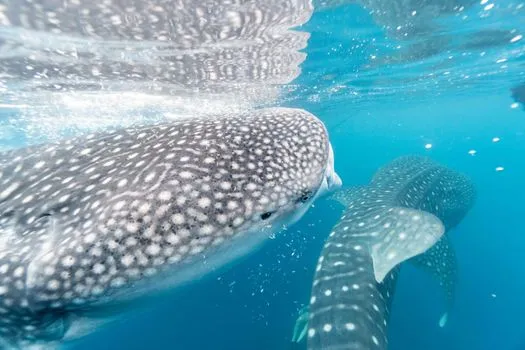
Wildbook began as a collaborative platform for globally coordinated whale shark research. After requests to use the software beyond whale sharks, it became an open-source, community-maintained standard for mark-recapture studies.
Wild Me lists multiple Wildbook-based platforms, each adapted to a species or species group. Examples include:
| Platform | Focus |
|---|---|
| Flukebook | Whales and dolphins. |
| Sharkbook | Sharks, including whale sharks and other species using fins, gill markings, scars, and other patterns. |
| MantaMatcher | Giant mantas and rays. |
| GiraffeSpotter | Giraffe species and individual spot-pattern matching. |
| Internet of Turtles | Sea and terrestrial turtles. |
| Zebra Wildbook | Grevy’s and plains zebras. |
| Wildbook for Lynx | Iberian lynx and lynx photo-identification. |
| African Carnivore Wildbook | Multiple large carnivore species, including use cases for broad-landscape demography and dispersal. |
| Amphibian and Reptile Wildbook | Multiple amphibian and reptile species. |
| Whiskerbook | Species whose whisker patterns support individual identification. |
This species-specific model is important. A whale fluke, zebra stripe pattern, manta belly pattern, giraffe coat, shark fin, and lynx coat all require different data practices and sometimes different matching techniques. Wildbook provides the shared infrastructure, while individual platforms adapt to the biology of the species.
Impact Case Study: The Great Grevy’s Rally
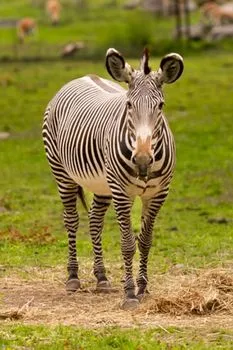
One of Wildbook’s clearest proof points is the Great Grevy’s Rally in Kenya. In 2016, the Grevy’s Zebra Technical Committee enlisted the public in a citizen-science survey across the species’ range. Participants photographed visible Grevy’s zebras over two days, producing more than 25,000 usable images. Those images were analyzed to estimate a Kenyan population of around 2,350 Grevy’s zebras.
The broader Wildbook research literature describes this as an example of crowdsourcing, computer vision, and ecological statistics coming together: ordinary citizens collected the images, algorithms and expert workflows helped match individuals, and the results informed official conservation knowledge.
The lesson is not that AI alone saved the zebra. The lesson is that conservation data systems can be redesigned so that more people can contribute useful observations and researchers can turn those observations into rigorous estimates faster.
How Wildbook Connects to CXL’s Wider AI Stack
Wildbook is part of a wider Conservation X Labs technology strategy. Another major CXL system is Sentinel, an AI toolkit for field monitoring that combines a device, AI models, and a dashboard to deliver near-real-time information from remote conservation sites.
The Wild Me merger announcement described the long-term opportunity clearly: Sentinel could notify conservation authorities not only that a jaguar was seen by a device, but which individual jaguar passed in front of the camera. That is the difference between species detection and individual-level intelligence.
CXL’s 2025 collaboration around the SA-FARI dataset and Meta’s Segment Anything models shows where this field is moving next: video, behavior, tracklets, segmentation masks, and open benchmark datasets for ecological monitoring. Wildbook’s individual-ID heritage fits naturally into this future stack, but it remains most valuable when paired with ecological questions and human review.
Limits, Risks, and Caveats
Wildbook is powerful, but no automated identification platform removes the hard parts of conservation science. Recent research on automated individual animal identification argues that the main barrier is often not simply model performance. The bigger issue is whether the system is aligned with ecological goals: what question is being asked, what data are available, what mistakes matter, and how decisions are reviewed.
| Challenge | Why it matters |
|---|---|
| Image quality | Blur, lighting, angle, occlusion, partial bodies, and repeated burst images can make individual ID unreliable. |
| Species differences | Some species have obvious individual patterns; others need different body parts, multi-image evidence, genetics, or manual confirmation. |
| Dataset bias | Citizen-science and tourism photos are not random samples. They cluster around roads, boats, tourist sites, seasons, and charismatic individuals. |
| False matches and missed matches | Errors can distort abundance estimates, movement histories, survival analyses, and management decisions. |
| Transparency | Researchers need to know why a match was suggested, how confident the system is, and what evidence supports a decision. |
| Operational sustainability | Long-term wildlife monitoring needs hosting, maintenance, model updates, data governance, and user support, not just a one-off model. |
The best framing is therefore AI-assisted conservation science. Wildbook accelerates curation and makes large-scale collaboration possible, but the conservation value depends on well-designed sampling, expert validation, transparent workflows, and careful interpretation.
Why Wildbook Is Important
Wildbook matters because it makes wildlife populations legible at the level conservation often needs: the individual. Species-level detection tells you what is present. Individual re-identification tells you who is present, whether that animal survived, where it moved, who it associates with, and whether the population is growing or shrinking.
Its larger significance is that it treats conservation data as shared infrastructure. A single whale shark, manta ray, zebra, lynx, turtle, or leopard may be photographed by many people in many places over many years. Without a collaborative system, those observations remain scattered. With Wildbook, they can become a life history.
That is the promise of Conservation X Labs and Wildbook: not technology for its own sake, but technology that helps conservationists move at the speed of the threats they are trying to stop.
Snapshot
| Question | Answer |
|---|---|
| What is Conservation X Labs? | A nonprofit conservation-technology and innovation organization focused on preventing human-driven extinction. |
| What is Wild Me? | The conservation AI and open-source software team now operating as part of Conservation X Labs. |
| What is Wildbook? | An open-source, web-based platform for collaborative wildlife photo-identification, mark-recapture, and population monitoring. |
| What does it identify? | Individual animals, usually by natural markings such as spots, stripes, scars, fins, flukes, shells, or other visible features. |
| What technologies does it use? | Web databases, PostgreSQL, Java/JSP, Python, computer vision, machine learning, species-specific matching algorithms, APIs, and human review workflows. |
| Why is it useful? | It turns scattered photos into structured records of individuals, sightings, movements, population estimates, and long-term conservation insight. |
Sources and Further Reading
Conservation X Labs — official website and impact metrics
Conservation X Labs and Wild Me announce merger, 9 January 2024
Wild Me Lab at Conservation X Labs — technologies and current platform metrics
Wild Me by Conservation X Labs — mission, publications, and open-source context
Wildbook — open-source framework and project history
Wildbook documentation — introduction and platform architecture
Wildbook GitHub repository
Wildbook Image Analysis GitHub repository
Wild Me platforms list
Wild Me publications list
Conservation X Labs Sentinel
Meta AI profile of CXL, SA-FARI, and Segment Anything for wildlife monitoring
Berger-Wolf et al. — Wildbook: Crowdsourcing, computer vision, and data science for conservation
Picek et al. — Centering Ecological Goals in Automated Identification of Individual Animals
Grevy’s Zebra Trust — Great Grevy’s Rally
United Nations summary of the IPBES Global Assessment
IUCN Red List — background and current assessment scale